
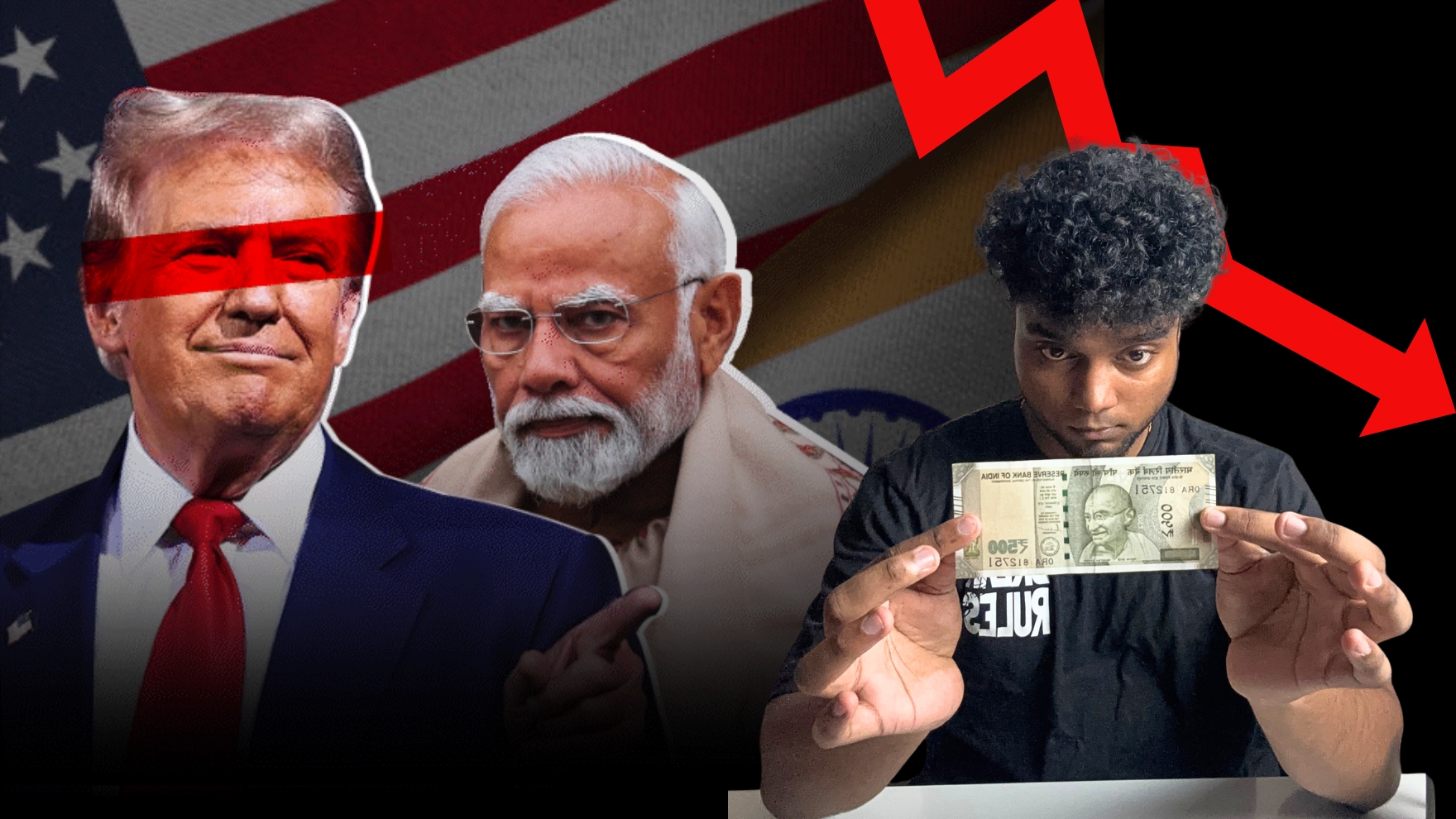
When Will the Rupee Hit ₹100? Why the INR Is Falling — and Why Indians Are Buying US Stocks Now
The rupee hit a record ₹96.84 to the dollar in 2026. Here's why it's falling, where Trump's tariffs fit in, whether it will touch ₹100 — and why a weak rupee is the strongest reason for an Indian to start investing in US stocks.
In January 2026, one US dollar cost about ₹90. By May, it hit an all-time high of ₹96.84. As of early July 2026, it sits near ₹95. If you earn in rupees, save in rupees, and dream in rupees — your money quietly lost value while you did nothing wrong.
This isn't panic. It's a pattern. And once you understand it, the same falling rupee that scares most people becomes the reason a smart Indian starts building wealth in dollars. Let's break it down — plainly.
Why is the Indian rupee falling in 2026?
A currency's price is just supply and demand for it. Right now, more people want dollars than rupees. Four forces are pushing at once:
Foreign money is leaving. Foreign investors pulled over $13.7 billion out of Indian stocks by mid-2026. When they sell Indian shares, they convert rupees back to dollars — selling rupees, buying dollars, pushing the rupee down.
Oil got expensive. India imports 87% of its crude oil, and pays for it in dollars. Conflict near the Strait of Hormuz in 2026 spiked oil prices — meaning India had to buy even more dollars to keep the lights on.
Trade tension. Tariff fights (more on Trump below) made global investors nervous about India's export earnings.
The RBI let it happen. This is the part most people miss. The Reserve Bank of India chose not to fully defend the rupee. A weaker rupee makes Indian exports cheaper and more competitive abroad. The RBI held its key rate at 5.25% and managed the fall rather than fighting it.
So the rupee didn't "crash." It was pushed by oil and outflows — and the RBI decided a controlled slide was acceptable.
Is Trump the reason the rupee is weak?
Partly — but it's more nuanced than the headlines say.
In February 2026, Trump signed a bilateral trade deal that actually cut tariffs on most Indian goods from 50% down to 18% — in exchange, India dropped tariffs on US goods and agreed to stop buying Russian oil. On paper, that's a win.
But the same period brought shocks: the US slapped preliminary countervailing duties of 126% on Indian solar cells and modules, and the broader tariff uncertainty rattled exporters. India sends about $87 billion in exports to the US — roughly 2.5% of its GDP. When that engine wobbles, so does confidence in the rupee.
The honest read: Trump is a trigger, not the root cause. The rupee was already under pressure from oil and foreign outflows. Trump's trade drama added fear on top. Blaming one man is the lazy explanation — the real story is structural.
Will the rupee recover, or keep falling?
Both, in cycles. The rupee already bounced back from ₹96.84 in May to around ₹95 by July — so recoveries happen. But zoom out: over the last 15 years the rupee has gone from ₹45 to ₹95 to a dollar. It recovers in the short term and weakens over the long term.
Why the long-term drift? India grows fast, but it also runs a trade deficit (imports more than it exports) and has higher inflation than the US. A currency with more inflation behind it tends to lose value against one with less, over time. That's not a crisis — it's math.
So expecting the rupee to permanently "come back" to ₹80 is hoping against the trend. Planning for a slowly weakening rupee is realistic.
When will the rupee hit ₹100 to a dollar?
This is the question everyone's searching — so let's be straight, not clickbait.
Nobody can name the date. Anyone who gives you an exact one is guessing. But here's the framework:
The rupee touched ₹96.84 in 2026 and is hovering in the mid-90s.
At its long-run pace of roughly 3–4% depreciation a year, ₹100 is not a distant fantasy — it's within a 1–2 year horizon under normal conditions.
It could happen faster if oil spikes again, if foreign outflows worsen, or if a fresh tariff shock lands.
It could be delayed if the RBI defends it hard, oil cools, or foreign money floods back in.
Bottom line: ₹100 is a matter of when, not if, on a multi-year view. Treat it as a near-certain direction, not a dated prediction.
Why is a falling rupee the best reason to own US stocks?
Here's the shift that changes everything. Most Indians see a weak rupee as a threat. For an investor, it's a built-in tailwind.
Imagine you invest in a US index fund. Two things now work for you at the same time:
The US company grows — its stock price rises in dollars.
The dollar rises against the rupee — so each of those dollars is worth more rupees when you bring the money home.
You earn twice: once on the business, once on the currency. If the US market returns 8% in dollars and the rupee falls 4%, your rupee return is roughly 12% — before you've picked a single "hot" stock.
Owning US assets isn't about being fancy. It's a hedge on your own currency. Every rupee that weakens makes your dollar savings more valuable. You stop being a victim of the falling rupee and start being on the other side of the trade.
How can you invest in US stocks from India?
It's legal, regulated, and easier than most people think. The RBI's Liberalised Remittance Scheme (LRS) lets any resident Indian send up to $250,000 per year abroad — far more than a normal investor needs. Two simple routes:
Direct US stocks: Apps and brokers now let you buy fractional shares of Apple, Google, or an S&P 500 ETF directly. You can start with a few thousand rupees.
Indian mutual funds / ETFs that invest in US markets: No dollar remittance needed — you invest in rupees, and the fund handles the US exposure. Simplest starting point for most people.
Watch the friction: foreign remittances attract TCS (Tax Collected at Source) above a yearly threshold — it's refundable/adjustable against your tax, but it ties up cash. Direct investing also means tracking US dividend tax and Indian capital-gains rules. For a beginner, a US-focused Indian mutual fund avoids most of this headache. (Tax rules change — confirm the current TCS rate and capital-gains treatment before you invest.)
What should you actually do?
Don't panic-buy dollars. Don't dump your Indian investments — India is still one of the fastest-growing major economies, and a weak currency is helping its exporters. This isn't "India bad, US good."
It's balance. A slice of your long-term money in US assets does two jobs: it captures the growth of the world's biggest companies, and it protects you from your own currency slowly weakening. Start small, start monthly (an SIP into a US index fund works beautifully), and let time and the falling rupee compound in your favour.
The people who complain about ₹95 to a dollar and the people who profit from it are looking at the exact same number. The only difference is which side of it they chose to stand on.
This is educational, not personalised financial advice. Currency and equity markets carry risk; do your own research or talk to a SEBI-registered advisor before investing.